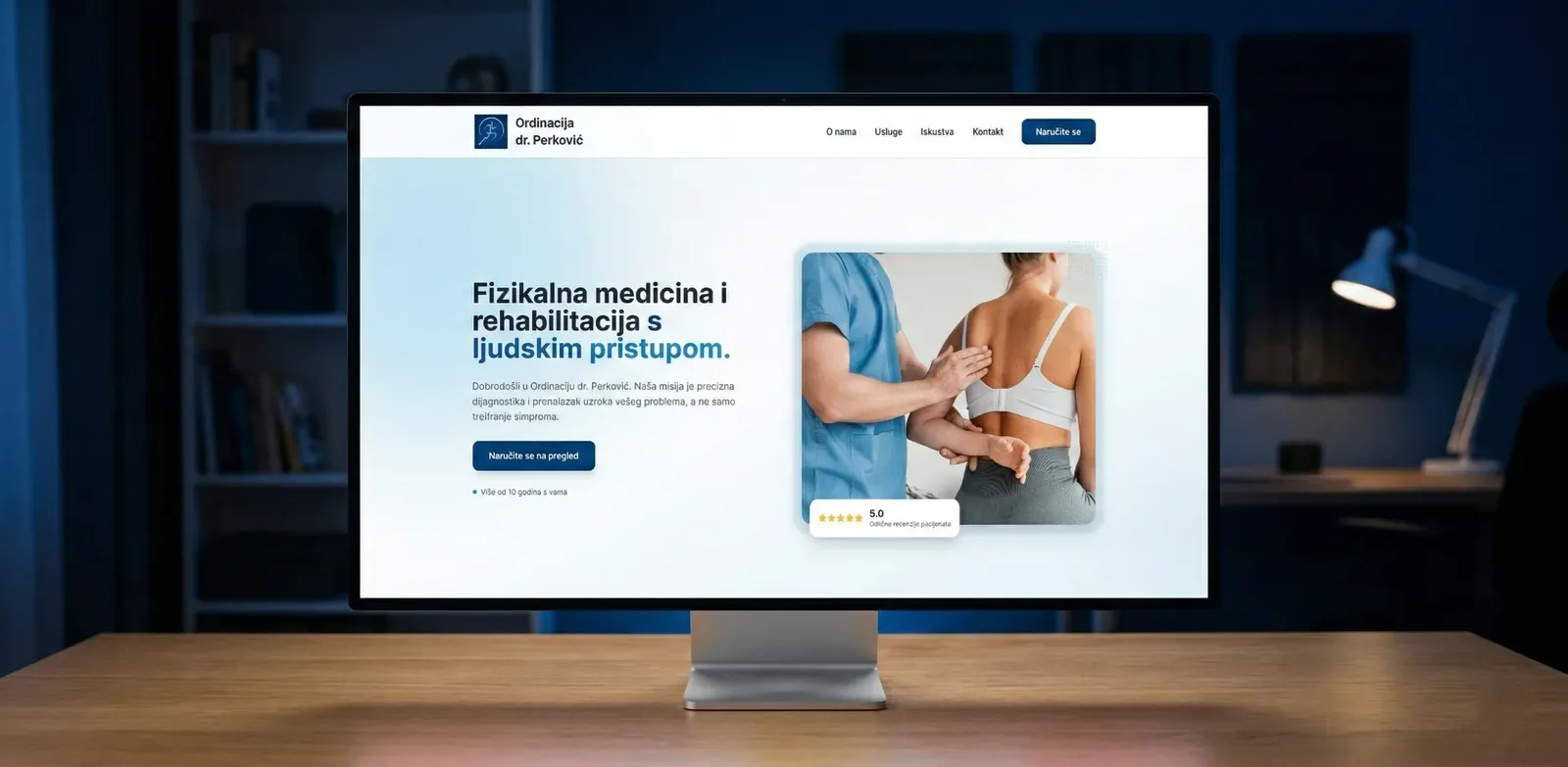
Kada razgovaramo sa potencijalnim klijentom, razgovor obično počne ovako: "Trebam web stranicu." Zvuči jednostavno. Ali nakon par pitanja često ispadne da im zapravo ne treba klasična web stranica. Treba im landing page. Ili obrnuto, misle da im treba landing page, a zapravo im treba cijela stranica.
Razlika između to dvoje nije samo tehnička. Ona određuje koliko novca investirate, koliko brzo krećete online, i što na kraju dobijete za taj novac. Prije nego donesete odluku, vrijedi razumjeti što svaka od tih opcija radi, i kada ima smisla.
Što je web stranica
Web stranica je kompletan digitalni dom vašeg poslovanja. Ima više stranica: početnu, o nama, usluge, portfolio ili galeriju, blog, kontakt. Svaka stranica ima svoju svrhu i svaka ciljana na različiti trenutak u odluci kupca.
Tipičan primjer: obrt koji radi stolariju ima stranicu s galerijom radova, stranicu s listom usluga (kuhinje, garderobe, terase), stranicu o procesu rada, i kontakt stranicu. Posjetitelj može lutati, čitati, razgledati, i tek nakon što je izgradio povjerenje, javiti se.
Web stranica se isplati kada:
- Nudite više usluga ili proizvoda i svaka zaslužuje vlastiti prostor
- Imate bogat portfolio radova koji gradi povjerenje
- Želite se rangirati na Googleu za više različitih pojmova
- Trebate prostor za blog, recenzije, česta pitanja
- Želite da vaša online prisutnost djeluje kao ozbiljna, uspostavljena tvrtka
Što je landing page
Landing page je jedna stranica s jednim ciljem. Nema navigacije, nema blog-a, nema opcija za "lutanje." Posjetitelj dolazi, vidi jasan prijedlog, uvjerljive dokaze, i jedan glavni gumb: rezerviraj, kupi, ispuni formu, nazovi.
Tipičan primjer: fizioterapeutska ordinacija pokreće novu uslugu. Umjesto da dodaje još jednu stranicu na postojeću web stranicu, radi landing page posvećen samo toj usluzi. Stranica objasni problem, predstavi rješenje, pokaže par preporuka i odmah ponudi zakazivanje termina. Kompletno iskustvo staje na jednu stranicu.
Landing page se isplati kada:
- Imate jedan specifičan cilj (prodaja proizvoda, rezervacija, prijava na webinar)
- Pokrećete marketinšku kampanju (Google Ads, Instagram oglasi, Facebook)
- Testirate novu uslugu prije nego investirate u veliku stranicu
- Niste još spremni za punu online prisutnost, ali trebate nešto profesionalno odmah
- Želite maksimalnu stopu konverzije, bez distrakcija
Ključna razlika: svrha, ne veličina
Mnogi misle da je landing page samo "mala web stranica." To nije točno. Razlika nije u veličini, nego u svrsi.
Web stranica je napravljena da informira. Vodi posjetitelja kroz priču vašeg poslovanja i daje mu razloge za povjerenje. Konverzija je rezultat, ali ne jedini cilj.
Landing page je napravljen da konvertira. Svaki element, svaka rečenica, svaki gumb, sve radi prema jednoj akciji. Nema "možda pogledajte i ovo." Nema "pročitajte naš blog dok ste tu." Ili napravite akciju, ili napustite stranicu.
Upravo zato su landing page-evi često idealni za plaćene oglase. Kada netko klikne na vaš oglas, nema smisla slati ga na početnu stranicu s deset opcija. Pošaljite ga na stranicu koja odgovara točno na ono što je kliknuo.
Kako odlučiti: tri konkretna scenarija
Scenarij 1: Obrtnik koji tek kreće online
Imate obrt, radite dobar posao, imate preporuke, ali nemate ništa online osim možda Facebook profila. Što vam treba?
Web stranica. Trebate svoj digitalni dom. Mjesto gdje potencijalni kupac može saznati tko ste, što radite, i zašto bi vas izabrao. Jedan landing page za jednu uslugu neće pokriti sve što ljudi žele znati prije nego se jave.
Scenarij 2: Već imate stranicu, ali pokrećete novu uslugu
Imate web stranicu, ide sve kako treba, ali želite lansirati novu liniju proizvoda ili novu uslugu. Plaćate Google Ads da privučete interes. Što vam treba?
Landing page. Šaljete promet s oglasa na dediciranu stranicu koja je napravljena da konvertira. Ne šaljete ih na početnu stranicu gdje se mogu izgubiti. Jedan fokus, jedna akcija.
Scenarij 3: Trebate nešto brzo, ali niste sigurni što sve nudite
Krenuli ste s poslom, ali još testirate ponudu. Ne znate koja usluga će najbolje raditi. Što vam treba?
Landing page. Počnite s jednom stranicom za vašu najjaču ponudu. Testirajte tržište. Kada saznate što radi, investirajte u kompletnu web stranicu u Osijeku oko te provjerene ponude.
Koliko svaka opcija košta
Generalno govoreći, landing page je manja investicija od web stranice, jer je manji obuhvat posla. Jedna stranica, jedan cilj, manje dizajniranja, manje pisanja, manje razvoja.
Ali pazite: landing page koji zaista konvertira nije jeftiniji samo zato što je kraći. Dobar landing page zahtijeva jasnu strategiju, uvjerljiv copywriting, i testirano iskustvo kroz koje posjetitelj klizi prema cilju. Ako vam netko ponudi landing page za deset eura, to najvjerojatnije nije landing page. To je jedan HTML dokument s tekstom.
Web stranica je veća investicija, ali i veća vrijednost u vremenu. Dobro napravljena stranica radi godinama, rangira se na Googleu, gradi brand, i služi kao temelj za sve ostale marketinške aktivnosti.
Zaključak: prva odluka prije dizajna
Prije nego zovete dizajnera ili agenciju, odgovorite si na dva pitanja:
-
Koji je konkretan cilj? Ako imate jedan cilj (prodaja, rezervacija, lead), landing page vjerojatno je pravi odabir. Ako imate više ciljeva ili želite graditi dugoročni brand, treba vam web stranica.
-
Gdje ste u svom poslovanju? Ako tek kreće, web stranica polaže temelje. Ako ste uspostavljeni i pokrećete nešto specifično, landing page rješava konkretan problem.
Obje opcije imaju svoje mjesto. Nema univerzalno točnog odgovora. Ali pogrešna odluka znači da ili plaćate previše za nešto što ne trebate, ili premalo za nešto što ne može dostaviti rezultat.
Niste sigurni što vam treba? Javite nam se. U Opus Studiju vam pomažemo da donesete pravu odluku. Pogledajte naše projekte, landing page Osijek ili izrada web stranica Osijek.